If you're like us, you spend all winter counting down the days until you can get back out on your Malibu and enjoy time spent with family and friends. While you wait for summer or your next boating trip, here's a good reminder of the safe boating practices that keep everyone on the water and having fun.
Before You Leave the Dock
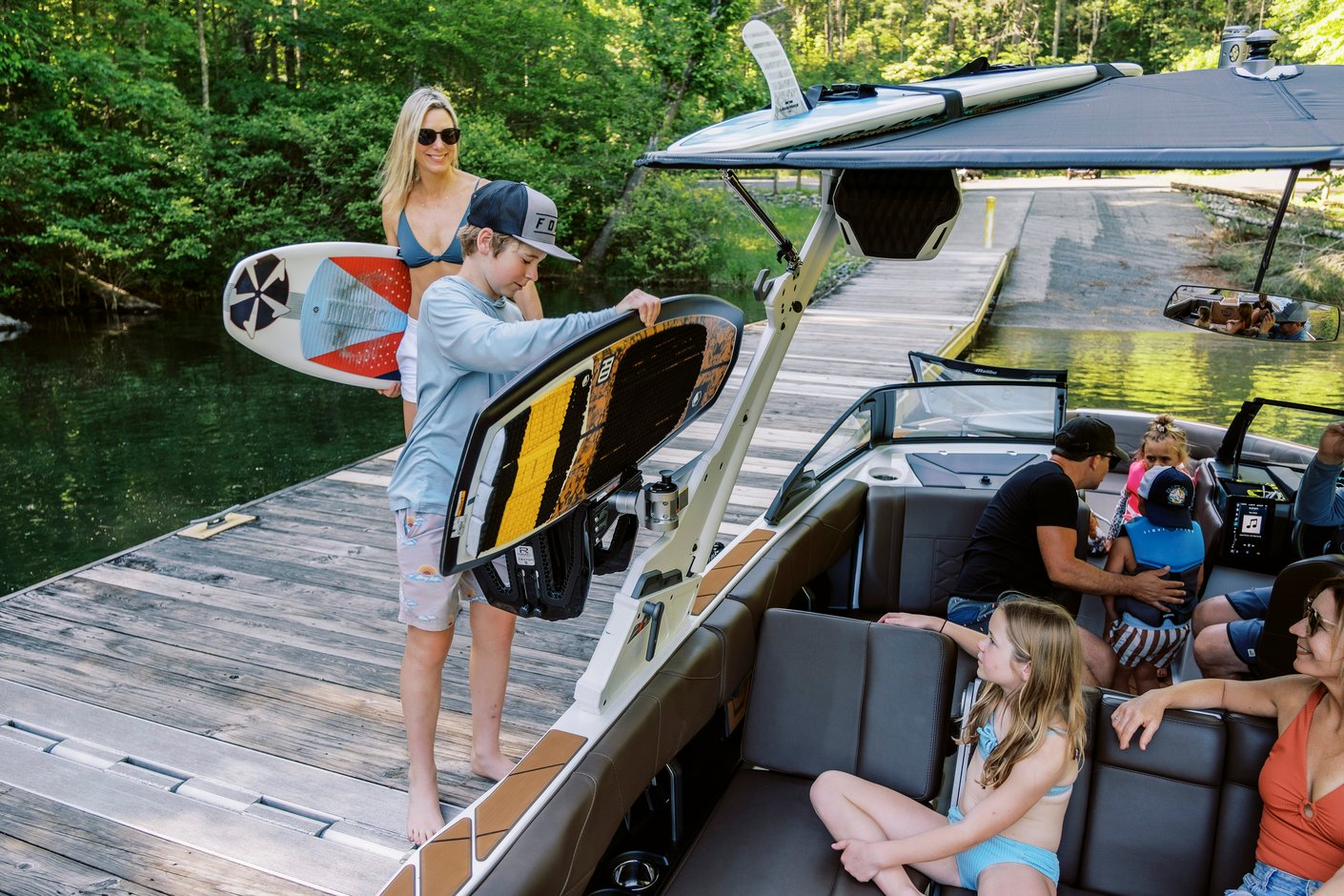
Great days on the water start with good preparation. Before anyone steps aboard, run through these boating safety essentials:
- Licensing and operator compliance. Before setting off, make sure anyone who plans to operate the boat complies with your local boat operator licensing laws.
- Attach the kill switch lanyard. Always attach the emergency engine cutoff switch safety lanyard to yourself before getting underway, and confirm that it's properly engaged.
- Run the blower. When you power the boat on, run the blower for at least four minutes before starting the engine. Make sure the throttle is in neutral, then start her up.
Know the Navigation Rules

Safe boating practices on the water depend on everyone knowing the rules of the road, or in this case, the rules of the lake. As the driver, it's your responsibility to be up to date on the U.S. Navigation Rules and to handle the three key scenarios: a crossing situation, a head-on situation, or an overtaking situation. You also need to know your navigational aids - buoys, markers, lights, and beacons - and understand what each one means. If you want a quick refresher, the BoatUS Foundation has a solid guide to get you up to speed.
Safe Towing: Getting Your Rider Up and Back In
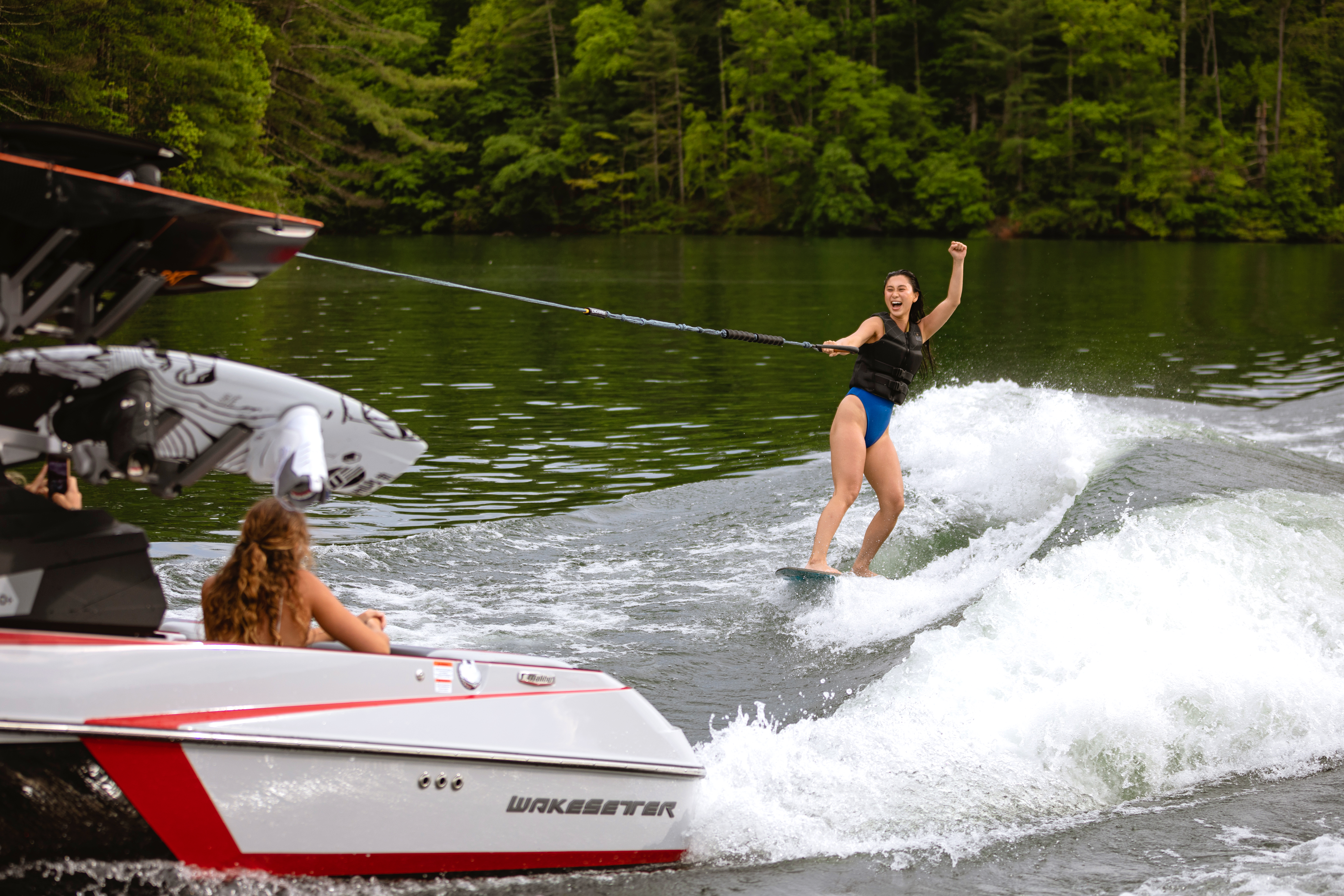
- Make sure they're wearing a U.S. Coast Guard-approved life jacket and have their gear ready.
- Attach the rope to the appropriate tow point and shut the engine off before the rider enters the water.
- Wait for the rider's thumbs up, idle forward until the line is taut, then ease the throttle forward slowly.
- Keep your eyes ahead and use your mirror to check on your rider. Check local laws & regulations to make sure you are doing everything by the book. For example, a spotter with a watersports flag is mandatory on some waterways to help keep an eye on the rider so that the driver can focus on driving.
When your rider falls, it is best practice to keep them on the starboard side, where they're easy to see from the helm as you loop back. Have your spotter throw them the rope if they want another run, or shut the engine off if they're coming back aboard.
Wake Responsibly
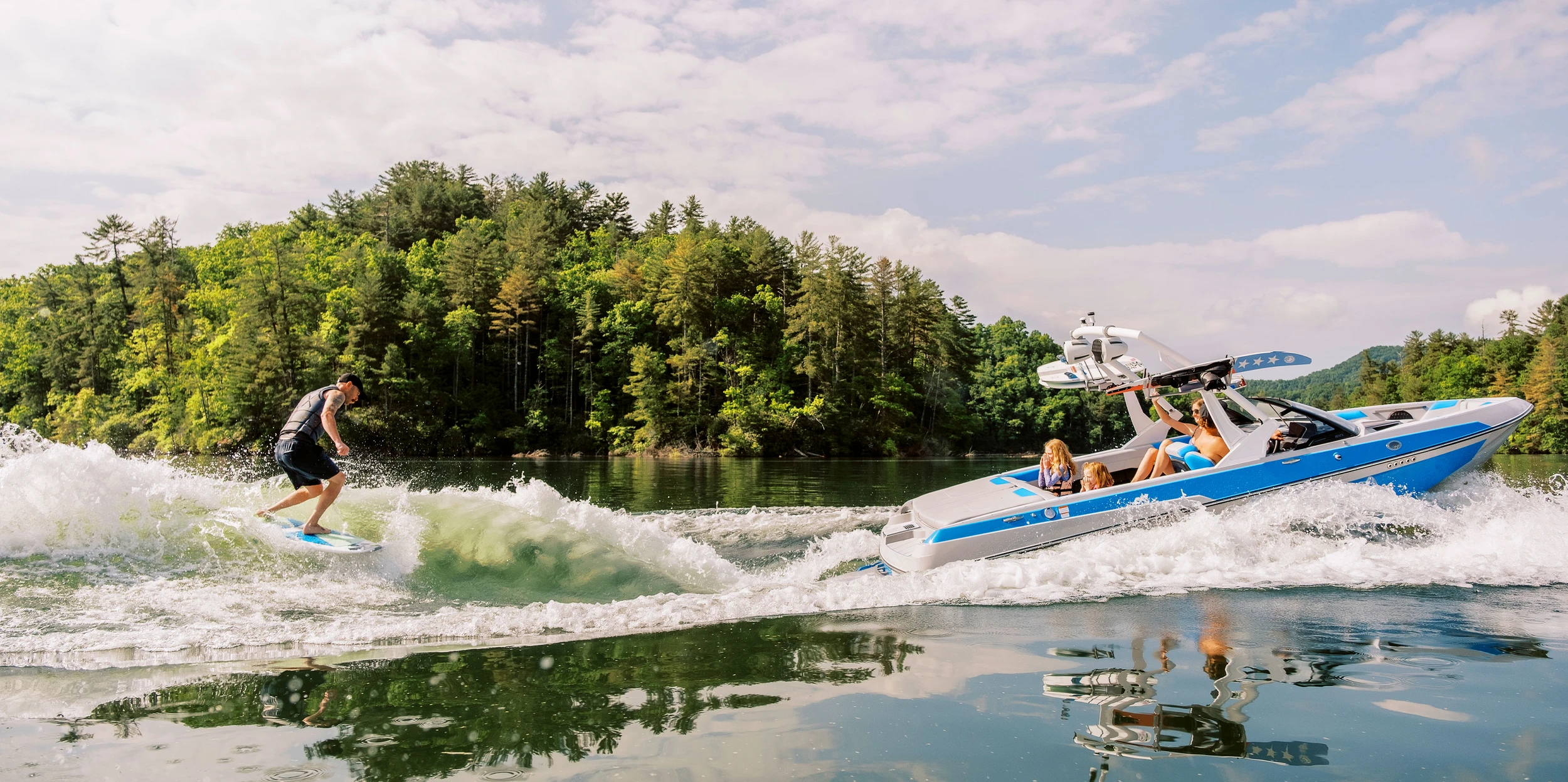
It's easy to get caught up in the excitement of what your rider is doing out there, but maintaining a safe distance from other boats, docks, and shorelines is non-negotiable.
As proud members of the Water Sports Industry Association (WSIA), we are fully committed to the Wake Responsibly movement: We promote education, respect, and responsible boating across the entire water community.
The Wake Responsibly guidelines are worth committing to memory. These include keeping your distance from docks & shores, operating your vessel in deep waters, reducing repetitive passes in the same area, and keeping music at reasonable levels. These are all habits that help keep local waterways open and enjoyable for everyone.
Look After Your Crew All Day Long
If you're spending a full day on the water, make sure you're checking in on your crew regularly. Staying hydrated and applying sun protection throughout the day is just as important as any item on your boat safety checklist. When you're anchored up, pop the bimini and give everyone a chance to cool down in the shade. If your Malibu is fitted with Tower Misters, put them to work, too. It's one of those small touches that make a long day on the water so much better.
Heading Home: The Final Checklist
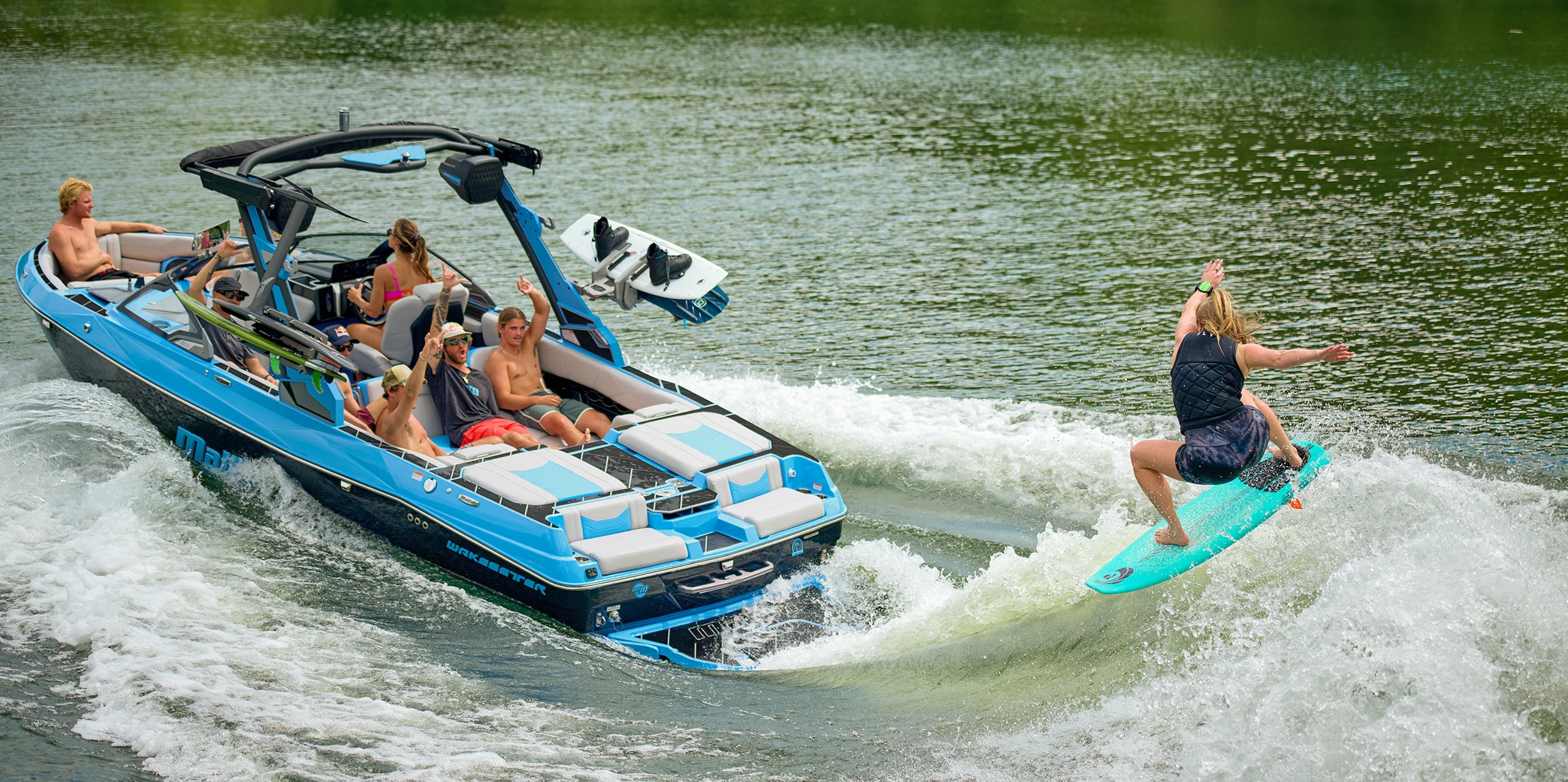
First, head to your Command Center™ and select the 'Go Home' button. This does the heavy lifting for you throughout the boat before you head home. It automatically drains all ballast, stows the Surf Gate™ and Power Wedge III™, and gets your boat dock-and-trailer ready.
As you get moving, watch for No Wake Zones or Slow Speed Zones which are marked with a circle on a sign or buoy. These are areas where you're required to keep your speed low enough that the boat doesn't produce a wake, typically to protect shorelines and other vessels that are docked or moored.
Finally, if you boat on multiple bodies of water, always decontaminate your boat after use. If your trailer has our Automatic Invasive Species (AIS) Flush system, this system will help prevent the spread of invasive species. This is a responsibility every boater shares, whether your waterway requires an inspection or not.
Conclusion

Some of these steps might feel like second nature by now, but even experienced boaters can benefit from running through the basics before heading out. A little preparation goes a long way toward making sure your friends and family have the ultimate day on the water, every single time. That's what being part of the Malibu family is all about.